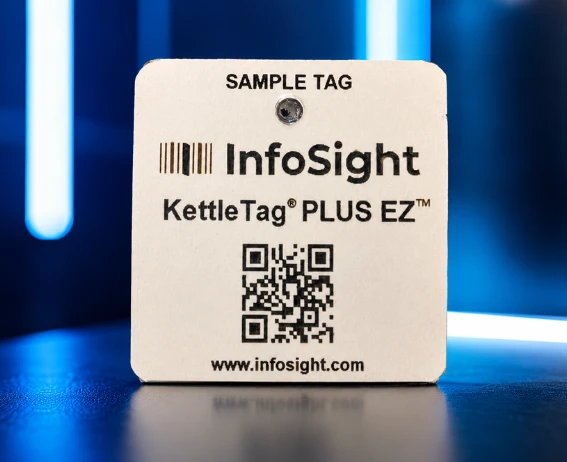
A digital code does not protect the label
A QR code printed on a standard office label is generally not designed to pass through galvanizing. Separate the encoded information from the method used to mark the surface. Printing a Fabbim link does not turn an indoor label into an industrial tag.
Printed codes and industrial marking
Printing, engraving and mechanical marking produce different surfaces. Suitability depends on the substrate and treatment, so a successful test of one method does not validate another. Direct marking of a steel component also requires review with the fabricator before modifying its surface.
QR code versus DataMatrix: test the reading workflow
Both formats encode information in two dimensions. Compare reading on your actual device, usable marking area, contrast and application support. A DataMatrix may suit industrial marking without being recognised by a workflow configured for QR codes.
Hot dip galvanizing identification tags →
Keep the code accessible after the zinc bath
Agree the position and attachment with the galvanizer, taking lifting, handling and treatment into account. The mark must remain accessible when parts are stacked. Avoid covering the code and retain a readable reference for manual checks.
Run a representative readability trial
Record the expected mark on a sample and check reading before and after the complete cycle. Use the actual reader under receiving conditions: distance, lighting and access to the steel. Confirm that the scan opens the correct assembly, rather than merely decoding a symbol.